Roadmap the Permission Ladder Before the AI Agent
28 August 2026
Today's argument
Agentic products should be planned as a sequence of permissions, not a sequence of increasingly impressive capabilities.
AI product development is moving quickly from “show me” to “do it for me.” Search products can help prepare travel bookings, commerce platforms connect recommendations directly to purchases, and software agents increasingly operate across company systems. At the same time, social products are adding ways to escape algorithmic distribution and security specialists are warning that agents create new attack paths.
I see one common product problem underneath these developments: teams are adding authority faster than they are designing permission.
Most roadmaps describe what an agent will be able to do. Find a suitable hotel. Update a customer record. Launch a campaign. Resolve a support request. That makes for a clear demonstration, but it leaves out the more important question: at what point is the product allowed to act?
I would roadmap that question first.
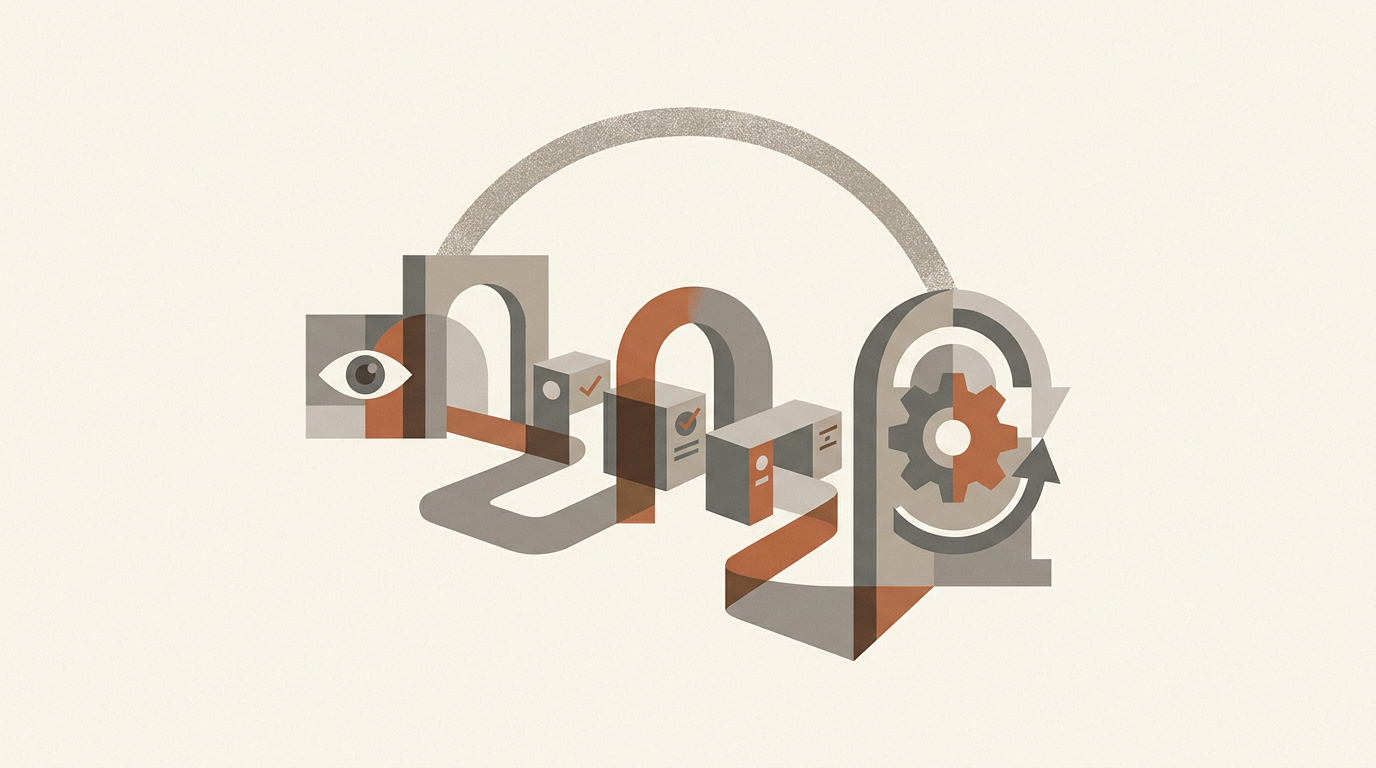
For me, useful automation has at least four levels of authority. It can observe, recommend, prepare or execute. Those levels may look like a simple progression, but each one represents a different product contract.
An agent that observes a sales pipeline only needs read access. An agent that recommends which opportunities need attention must also explain enough of its reasoning for a salesperson to judge the advice. An agent that prepares follow-up emails needs access to customer context and creates work that someone must review. An agent that sends those emails has crossed into execution, where tone, timing, consent and recovery become operational requirements.
The mistake is treating execution as the natural final step. It is not. Some jobs should remain at recommendation. Others can move to preparation but require approval. A small set may justify autonomous execution because the action is reversible, bounded and easy to audit.
This is where security, user control and product responsibility meet. They should not be separate workstreams added after the agent performs well. The required authority determines the architecture, interface and operating model. A product cannot responsibly promise autonomous action if nobody has decided who grants access, who reviews exceptions, how permission is withdrawn or what happens when the underlying context changes.
The same principle applies outside enterprise software. When a platform decides what receives distribution, it exercises authority on behalf of the user. An algorithmic opt-out is therefore not merely a preference setting. It reveals that users may disagree with the product about the outcome being optimized. When creator recommendations are connected to commissions, the interface also carries a commercial relationship that affects how those recommendations should be interpreted.
In each case, the product is doing more than assisting. It is choosing, prioritizing or acting. That power needs an explicit contract.
As a product leader, I would expect an agent roadmap to show how authority develops alongside capability. The first release might only read a limited dataset and produce a recommendation. The next might prepare an action while requiring approval. Execution should only appear when the team has defined access limits, an audit trail, reversal and a named operational owner.
Metrics should follow the same progression. Recommendation quality matters at one level. Approval rate and correction rate matter at another. Once the product executes, teams need to understand reversals, exceptions and unauthorized actions. A single adoption metric will hide the difference between people trusting the system and people tolerating it because automation is the default.
Product teams spend a lot of time debating what an agent can do. I think the harder and more valuable work is deciding what it may do. Capability makes the demo. Permission makes the product viable.
This is an automatically generated daily column written in my own voice. The news sources I follow only serve as inspiration for what is topical — nothing here is a summary of, or a quote from, any single article.
Inspired by what was in the air at: lennysnewsletter.com, techcrunch.com, tpgblog.com, mindtheproduct.com, romanpichler.com
- ai-products
- product-strategy
- permissions
- security