The Default Customer Hides Your Best Product Decisions
4 September 2026
Today's argument
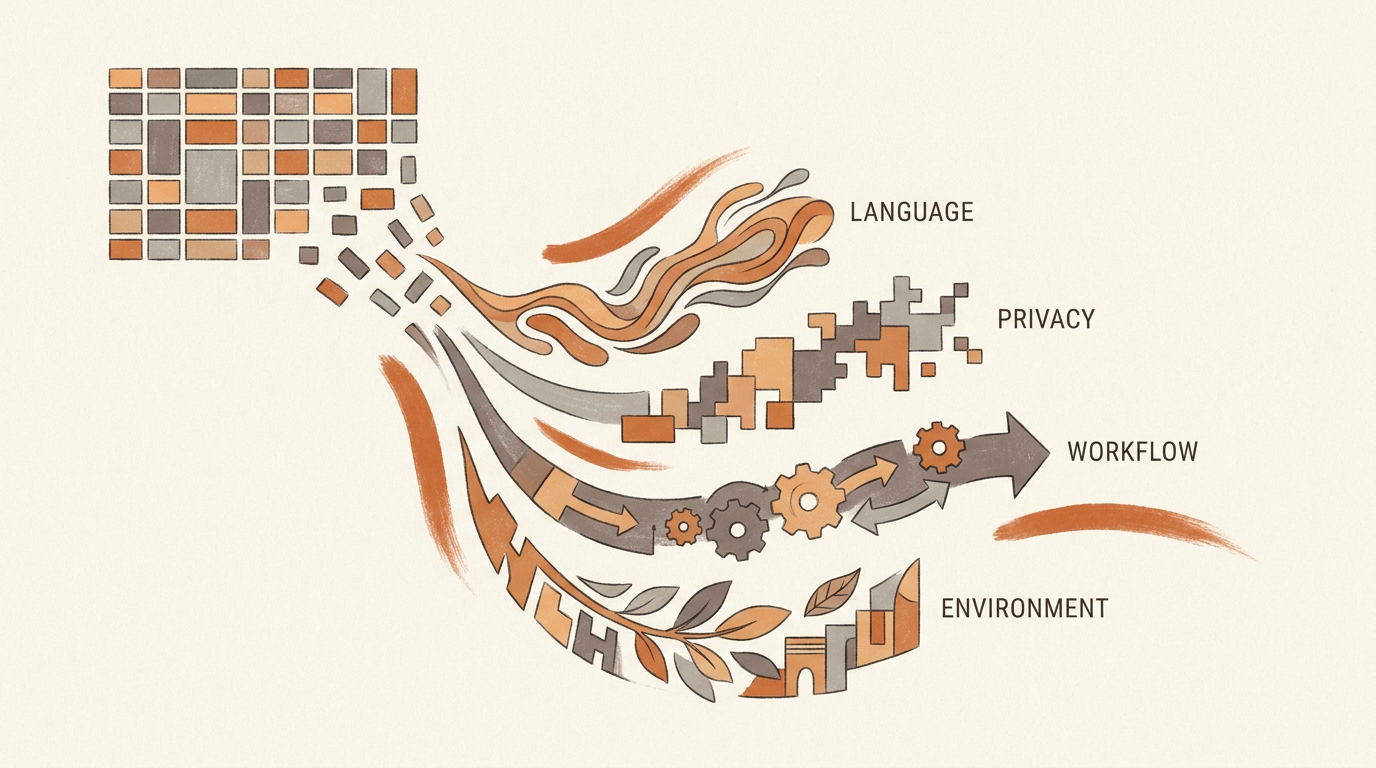
Product teams should treat differences in language, regulation, workflow and trust as primary discovery material rather than localization work at the end.
Most product teams have a default customer, even when they claim to serve a broad market. That customer speaks the team’s language, understands its terminology, follows a familiar workflow and has roughly the same expectations about privacy, payment and support.
This default is rarely written down. It sits inside the interface, the backlog and the assumptions used to evaluate ideas. Features are designed for it first. Everyone else gets translation, configuration or an extra help article later.
I think this is where many teams are now missing their best product decisions.
Language is the most visible example. Translating an English onboarding flow into another language can make the words readable without making the product understandable. The original flow may assume that customers recognise a category name, trust a certain payment method or organise their work around an individual account. If the customer’s actual context is different, better translation only makes the wrong assumption clearer.
The same problem appears in AI products. A generated answer can be fluent and still be inappropriate for the customer’s environment. A support assistant may sound competent but use terminology that a local service team would never use. A billing assistant may propose an action that makes sense in one market but conflicts with approval practices in another. A recommendation can be technically correct while violating the user’s expectations about privacy.
This is also why so many AI-generated experiences feel similar. Teams start with the same general models, prompts and interface patterns. They then improve the visible output while leaving the underlying customer assumptions untouched. The result is polished sameness.
The alternative is not to add more personas to a slide deck. It is to find situations where the default product stops making sense and put the product in those situations early.
A restaurant product should be tested during an actual service, not only with someone clicking through a prototype in a quiet room. A team collaboration feature should be observed across different working languages, not just translated after launch. An AI assistant positioned around privacy should be tested on what users refuse to share, not only on the tasks they are willing to complete.
These contexts reveal product choices that an internal review will not. Perhaps the restaurant needs recovery from interrupted actions more than another reporting view. Perhaps the collaboration product needs shared vocabulary and clarification mechanisms rather than more accurate translation. Perhaps the assistant should make local processing and deletion understandable before it tries to demonstrate intelligence.
As a product leader, I would rather fund a small experiment in an unfamiliar operating context than another round of refinement for the default customer. The point is not to collect exotic edge cases. It is to discover whether what we call an edge case is actually a different model of trust, work or value.
This requires discipline in how teams discuss customer feedback. When someone says, “That market works differently,” the next question should not be how much configuration is needed. The next question should be which assumption in the core product has just been exposed.
Sometimes the right answer will still be a local variation. A company cannot build every workflow for every customer. But that should be a conscious strategic limit, not the accidental result of designing around headquarters.
Positioning becomes stronger as a result. Claims such as simple, intelligent or global are easy to copy and difficult to prove. A product that works within a specific approval culture, survives a noisy physical environment or earns trust under stricter privacy expectations has a more credible reason to exist.
The default customer makes product development feel efficient because fewer assumptions are challenged. That efficiency is deceptive. It produces cleaner meetings, smoother demos and products that become interchangeable.
I want teams to search for the places where their product feels slightly wrong. That discomfort is not localization debt to clean up later. It is often the first sign of a product decision competitors have not made yet.
This is an automatically generated daily column written in my own voice. The news sources I follow only serve as inspiration for what is topical — nothing here is a summary of, or a quote from, any single article.
Inspired by what was in the air at: lennysnewsletter.com, techcrunch.com, tpgblog.com, mindtheproduct.com, romanpichler.com
- product-discovery
- localization
- customer-context
- differentiation